
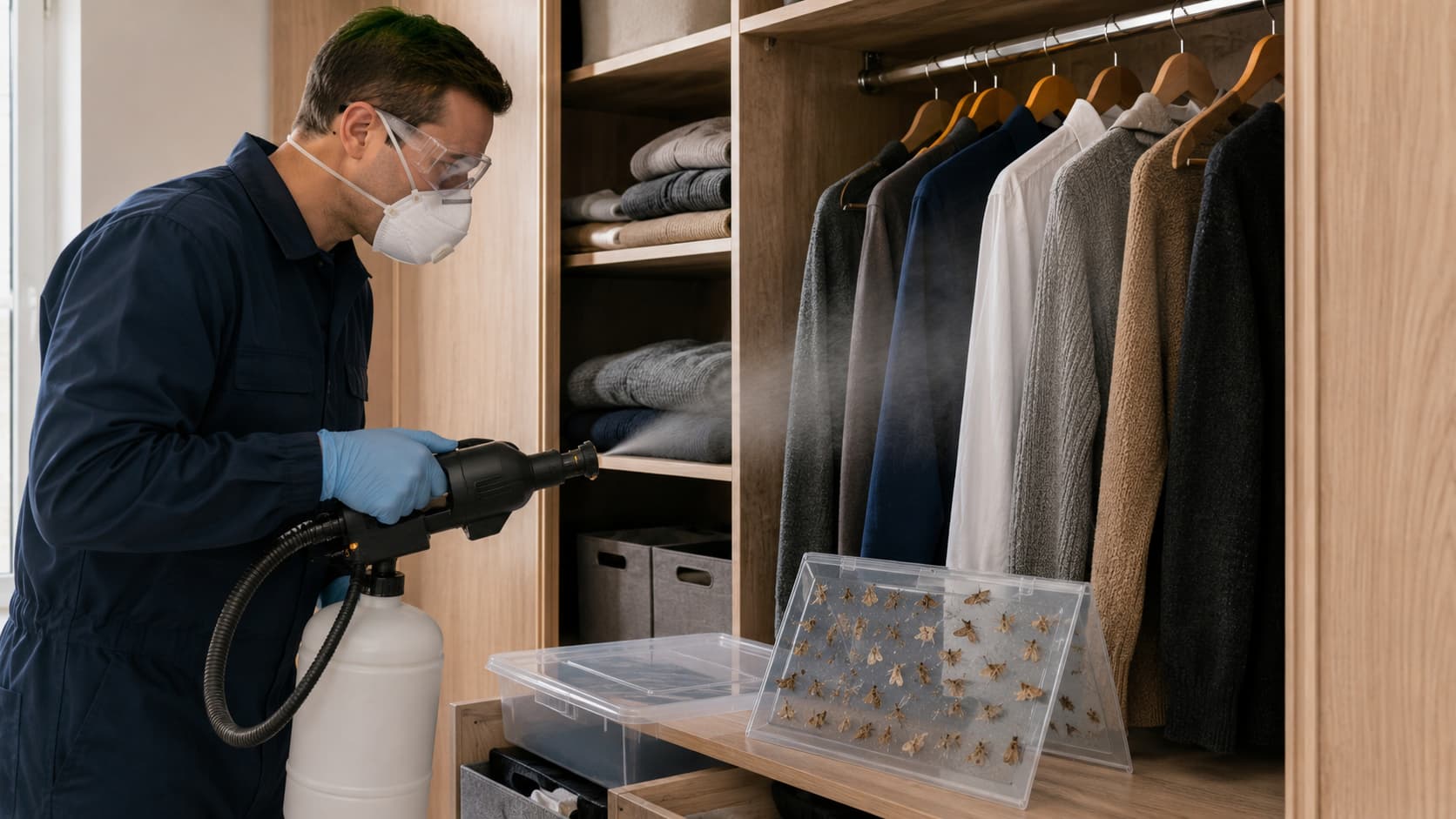
Moth Control Service in Logan, UT (2026)
Moths may seem harmless compared to other household pests, but certain species can quietly damage clothing, stored fabrics, and pantry goods before homeowners even notice a problem. Clothes moths chew through wool, silk, and other natural fibers, while pantry moths contaminate stored grains, cereals, and dried goods. Logan homes with closets, storage rooms, or pantries that go undisturbed for stretches of time are especially prone to moth infestations. A professional moth control service in Logan can identify the source and eliminate moths before further damage occurs.
Why Moth Infestations Go Unnoticed
Moths are most active at night and tend to avoid light, hiding in dark closets, storage boxes, and pantry corners. Their larvae, not the adult moths themselves, cause the actual damage, feeding on fabric fibers or stored food for weeks before homeowners spot visible signs. By the time damage is discovered, an infestation is often already well established.
Signs of a Moth Infestation
Holes in Clothing or Fabric
Irregular holes in wool sweaters, blankets, or upholstered furniture are a hallmark sign of clothes moth larvae feeding.
Silken Webbing or Cocoons
Small silky threads or cocoon-like casings in closets, drawers, or fabric folds indicate active larvae development.
Webbing in Pantry Items
Fine webbing inside flour, cereal, or grain containers points to pantry moth activity contaminating stored food.
Adult Moths Near Light Sources
Small moths fluttering near closets, pantries, or light fixtures in the evening often signal a nearby breeding source.
What a Professional Moth Treatment Involves
Inspection and Source Identification
Technicians locate infested items, whether stored fabrics, pantry goods, or hidden nesting areas, to determine the full scope of the problem.
Targeted Treatment
Depending on the moth type, treatment may include pheromone traps, residual sprays in closets and storage areas, or removal of infested materials.
Pantry and Storage Cleanout Guidance
Technicians advise on discarding contaminated food items and properly cleaning storage areas to eliminate remaining eggs and larvae.
Follow-Up Monitoring
Pheromone traps and periodic checks help confirm the infestation has been resolved and catch any recurring activity early.
Preventing Moths Between Treatments
Homeowners can reduce risk by storing fabrics in sealed containers, regularly vacuuming closets and storage areas, keeping pantry goods in airtight containers, and inspecting secondhand clothing or fabric items before bringing them home.
Frequently Asked Questions
What is the difference between clothes moths and pantry moths?
Clothes moths feed on natural fibers like wool and silk, while pantry moths infest stored food items such as grains, cereal, and dried goods.
How long does it take to eliminate a moth infestation?
Depending on severity, moth treatment can take a few weeks to fully break the life cycle, since eggs and larvae may still be present after initial treatment.
Can I just throw away infested items instead of treating the area?
Removing infested items helps, but eggs and larvae can spread to nearby areas, so treating the surrounding space is usually necessary to fully resolve the problem.